
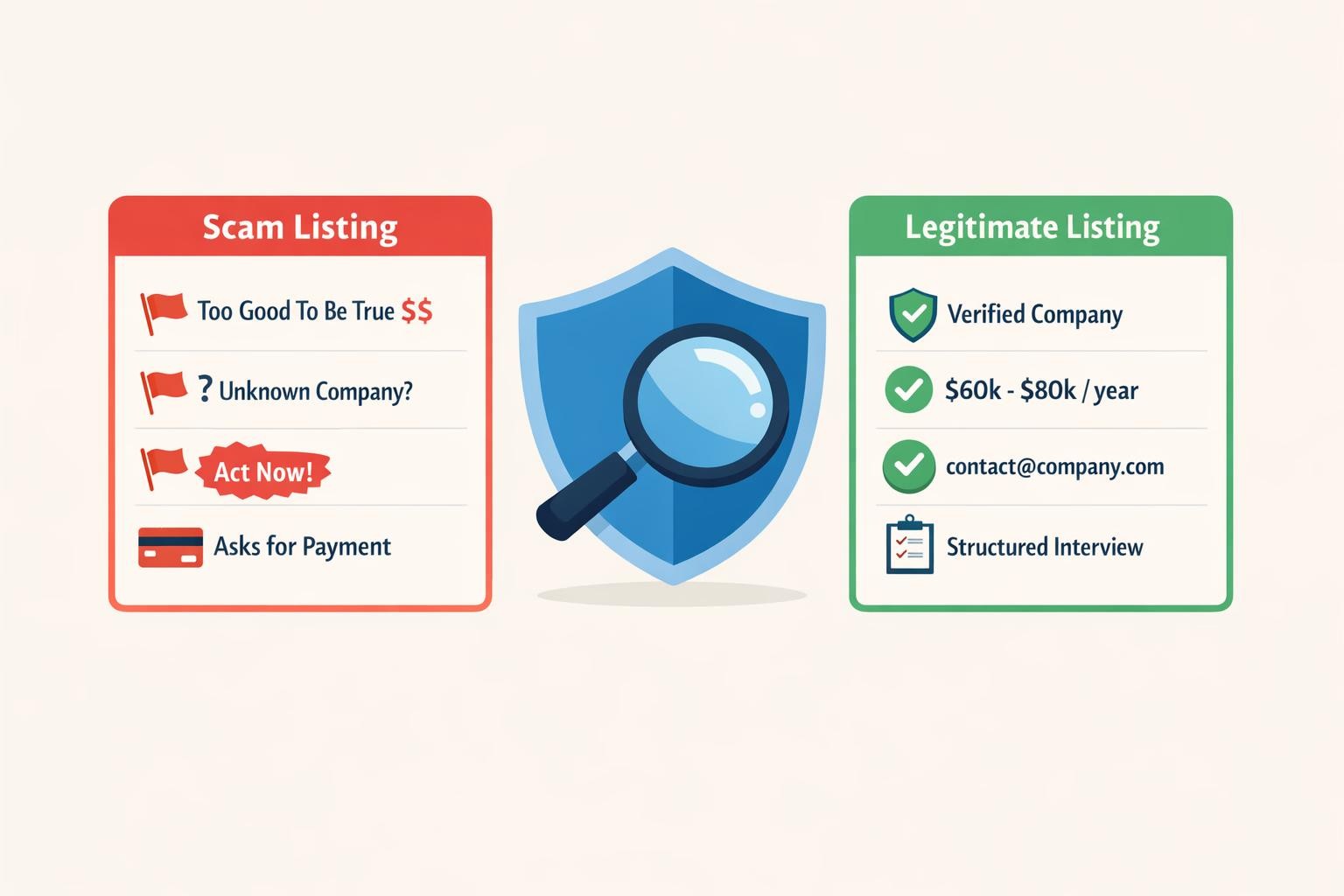
Remote job scam losses hit $521 million in 2026, according to the Federal Trade Commission. That number tripled from just $90 million four years earlier. And it is accelerating: McAfee reported a 1,000% spike in job-related scams between May and July 2026 alone. If you are searching for remote work right now, the odds of encountering a fraudulent listing are higher than they have ever been. Knowing how to spot remote job scams is the single most important skill you can develop before you send out a single application.
Learning to recognize patterns protects you far more than worry does. Scammers rely on urgency, excitement, and the emotional vulnerability of job seekers to bypass critical thinking. Once you learn the patterns, fake listings become obvious. This guide breaks down every major scam type, the red flags that reveal them, and the exact steps to verify any opportunity before you hand over personal information or money.
Why Remote Job Scams Are Exploding in 2026
The math is simple. Remote work demand surged 51% in 2026. Over 1.2 million workers were laid off in the U.S. that same year. Desperate people make easier targets, and scammers know it.
Three forces are driving the surge. First, AI has made fake job postings nearly indistinguishable from real ones. The era of poorly written scam emails with obvious spelling errors is over. Today's fraudulent listings use polished corporate language, professional formatting, and even fake company websites that pass a casual glance. Second, the shift to remote hiring means candidates expect to never meet their employer in person, which removes a natural verification step. Third, platforms like LinkedIn, Indeed, and Craigslist struggle to screen the volume of postings they receive.
In the first quarter of 2026, the FTC received approximately 31,000 reports of job or employment text scams. Globally, victims lost $461 billion to scams of all types in 2026, according to the Global Anti-Scam Alliance. The average individual victim of a job scam loses over $2,000, but some cases go much higher. One Bay Area tech veteran lost $176,000 to a fake Facebook job offer that used AI-generated communications throughout the process.
The 6 Most Common Remote Job Scam Types
Understanding the specific mechanics of each scam type makes them far easier to identify. Here are the six you are most likely to encounter.
1. Advance Fee Fraud
This is the most common type. The scammer offers you a remote position, walks you through what sounds like a legitimate onboarding process, then asks you to pay for training materials, background checks, certification courses, or software licenses. The payments are almost always requested through untraceable methods: cryptocurrency, wire transfers, gift cards, or peer-to-peer payment apps.
When Marcus applied for a remote data entry position paying $35 per hour, everything seemed legitimate. The company had a professional website, the recruiter used a company email address, and the job description was detailed. Two days after his "acceptance," he was told to purchase a $200 software license and a $150 background check. Both payments went to a Venmo account. Marcus never heard from the company again.
The rule is absolute: legitimate employers never ask you to pay for anything. Not training. Not equipment. Not background checks. If money flows from you to the employer before your first paycheck, it is a scam.
2. Fake Check and Overpayment Scams
A company "hires" you and sends a check, often for thousands of dollars, to cover equipment purchases or setup costs. The check is for more than the actual amount, and you are asked to deposit it and send back the difference through a wire transfer or gift cards. The check bounces days or weeks later, but your outgoing payment is already gone.
A Wisconsin job seeker was offered $35.75 per hour for remote data entry. The company sent checks totaling over $16,000 for "home office equipment" and pressured her to deposit them within minutes. When she called the actual company listed on the checks, they had never heard of the job.
3. Phishing and Identity Theft Scams
These scams do not ask for money at all, which makes them harder to spot. Instead, they collect personal information: your Social Security number, bank account details, copies of your driver's license, or login credentials. The scammer poses as an HR representative from a real company and requests this information as part of "onboarding paperwork."
Sarah received an email from what appeared to be a recruiter at a Fortune 500 company. The email domain was off by one letter, something she did not notice until later. She filled out an "employment verification form" that asked for her Social Security number, date of birth, and bank routing number. Within a week, two credit cards had been opened in her name.
No legitimate employer asks for your Social Security number or banking information before you have signed an official offer letter and completed tax forms through a verified HR system.
4. Equipment Purchase Scams
The employer tells you they will send money to purchase specific equipment from a designated vendor. That vendor is either fake or controlled by the scammer. You "buy" the equipment, the money disappears, and no equipment ever arrives. In some variations, the company sends you a laptop or equipment that was purchased with a stolen credit card, making you an unwitting participant in fraud.
5. Task-Based and Gamified Scams
This is the fastest-growing category. You are recruited through text messages or social media to perform simple online tasks: liking videos, rating products, writing reviews. You earn small amounts initially, building trust. Then you are asked to "invest" money to unlock higher-paying tasks. The returns shrink and eventually disappear, along with your investment. The FTC specifically flagged these game-like online job scams in a December 2025 press release, noting skyrocketing consumer reports.
6. Reshipping and Money Mule Scams
You are hired to receive packages at your home address and reship them to another location, or to receive money in your bank account and transfer it elsewhere. Both scenarios involve stolen goods or laundered funds. You are not just being scammed; you are being used as an intermediary in criminal activity, which can result in legal consequences for you.
Red Flags Checklist: How to Spot Remote Job Scams
Print this list. Bookmark it. Reference it every time you evaluate a new opportunity.
- The pay is unusually high for the work described. A data entry job paying $50 per hour or a customer service role offering $80,000 for 20 hours a week should trigger immediate skepticism.
- You are offered the job without a real interview. Legitimate remote employers are thorough because they cannot assess you in person. A job offer after a single brief chat, or with no interview at all, is a major warning sign.
- They contact you first via text or social media. Real recruiters reach out through LinkedIn, professional email, or job platforms. Unsolicited text messages offering remote work are almost always scams.
- The job description is vague. Phrases like "flexible hours, great pay, work from home" with no specifics about actual responsibilities, required skills, or reporting structure indicate a fake listing.
- They ask for money. For any reason. Period. Training fees, equipment costs, background checks, certification exams. Legitimate employers cover these costs.
- Communication happens through personal email or messaging apps. Real companies use corporate email addresses (name@company.com) and standard video conferencing tools. If your entire interview process happens over Telegram, WhatsApp, or a Gmail address, walk away.
- Pressure to act immediately. "This offer expires today" or "We need your information within the hour" are pressure tactics designed to prevent you from doing due diligence.
- The company cannot be verified. No LinkedIn presence, no Glassdoor reviews, no press coverage, a website registered within the last few months. More on verification below.
- They ask for sensitive information too early. Bank account numbers, Social Security numbers, or copies of identification documents should never be requested before a formal, verified job offer.
- The email domain does not match the company. Check carefully. Scammers use domains like "company-careers.com" or "companyhr.net" instead of the actual "company.com" domain.
How to Verify a Remote Job Is Legitimate
Verification takes 10 to 15 minutes and can save you thousands of dollars and months of identity theft recovery. Here is the process.
Step 1: Check the company's official website. Go directly to the company's website by typing the URL into your browser. Do not click links in emails or messages. Look for the job listing on their official careers page. If the position you were offered does not appear there, contact the company directly to ask.
Step 2: Verify the recruiter's identity. Search for the recruiter on LinkedIn. Confirm they actually work at the company. Check their profile for connection count, work history, and activity. Brand new profiles with few connections are suspicious. If possible, reach out to the company's HR department through their official contact information to confirm the recruiter is real.
Step 3: Research the company. Search for the company name plus "scam" or "fraud" on Google. Check the Better Business Bureau website. Look at Glassdoor reviews. Search for the company on the FTC's complaint database. A legitimate company with any meaningful size will have a digital footprint. Our list of the 50 best remote companies to work for in 2026 is a useful starting point for identifying employers with strong reputations.
Step 4: Examine the job posting details. Real job listings include specific responsibilities, required qualifications, reporting structure, and information about the hiring process. They reference real tools, methodologies, and industry terms. Generic listings that could apply to any job are red flags.
Step 5: Validate the interview process. Legitimate remote employers typically conduct multiple rounds of interviews using standard video conferencing tools. They introduce you to team members. They ask substantive questions about your skills and experience. A process that feels rushed, surface-level, or focused on collecting your personal information rather than evaluating your qualifications is suspect.
If you are using a structured approach to finding remote jobs, you are already less likely to encounter scams because you are applying through verified channels rather than responding to unsolicited outreach.
What to Do If You Have Been Scammed
Act quickly. The faster you respond, the more damage you can limit.
- Stop all communication with the scammer. Do not engage further, even to confront them. Block the number, email, and any social media accounts.
- Report to the FTC. File a complaint at ReportFraud.ftc.gov. Your report helps the FTC identify patterns and take enforcement action. In 2026, the FTC launched a Labor Task Force specifically focused on protecting workers from these practices.
- Report to the platform. If you found the listing on LinkedIn, Indeed, or another job board, report it directly. These platforms have fraud teams that can remove listings and investigate accounts.
- Contact your bank. If you sent money, contact your bank or payment provider immediately. Some transactions can be reversed if reported quickly. For credit card charges, dispute them. For wire transfers or cryptocurrency, recovery is unlikely but still worth attempting.
- Freeze your credit. If you shared your Social Security number or other identity documents, place a fraud alert and credit freeze with all three major credit bureaus: Equifax, Experian, and TransUnion. This prevents new accounts from being opened in your name.
- Monitor your accounts. Check your bank statements, credit reports, and online accounts regularly for the next 12 months. Set up transaction alerts on your bank accounts and credit cards.
- File a police report. While local police may not investigate online fraud directly, a police report creates an official record that can help with insurance claims, credit disputes, and identity theft recovery.
Safe Remote Job Search Practices
Prevention is far more effective than recovery. Build these habits into your job search from day one.
Use reputable job boards. Start your search on established platforms with verification systems. DailyRemote lists verified remote job postings across software development, marketing, design, and dozens of other categories. These platforms invest in screening processes that individual searchers cannot replicate.
Apply through company websites. Once you identify a company you want to work for, go directly to their careers page. This bypasses the risk of fake listings on third-party platforms entirely.
Never share financial information during the application process. Your bank account and Social Security number are only needed after you have a formal, written job offer from a verified company, and even then, only through official HR systems or verified tax forms.
Be skeptical of unsolicited offers. If a job finds you rather than the other way around, apply extra scrutiny. This is especially true for offers arriving via text message, WhatsApp, or Telegram.
Trust your instincts. If something feels off, it probably is. Legitimate employers understand that candidates need time to evaluate opportunities. Any company that pressures you to decide or share information immediately is not one you want to work for, even if it is real.
Keep records of everything. Save emails, screenshots of job postings, and records of all communications. If a situation turns out to be a scam, this documentation is essential for reporting and recovery.
Avoid common remote job application mistakes that can make you more vulnerable, like applying to every listing without researching the company or sharing personal information before verifying the opportunity. You can also use AI tools to speed up your remote job search while still verifying every opportunity manually.
Free resource: Download our 6-Week Remote Job Search Plan, a structured framework that helps you find legitimate remote jobs safely.
The Bottom Line
The remote job market is real, growing, and full of genuine opportunities. But so is the scam industry surrounding it. The FTC's data is clear: losses are climbing, scams are more sophisticated than ever, and AI is making fake listings harder to distinguish from real ones.
Your defense is straightforward. Never pay to get a job. Never share sensitive information before verifying an employer. Always check the company's official website. And if an opportunity seems too easy, too fast, or too good to be true, it is.
The 10 minutes you spend verifying a job posting could save you thousands of dollars and months of recovery. Make verification a non-negotiable part of your search process, and you will find the legitimate remote work you are looking for without becoming a statistic.